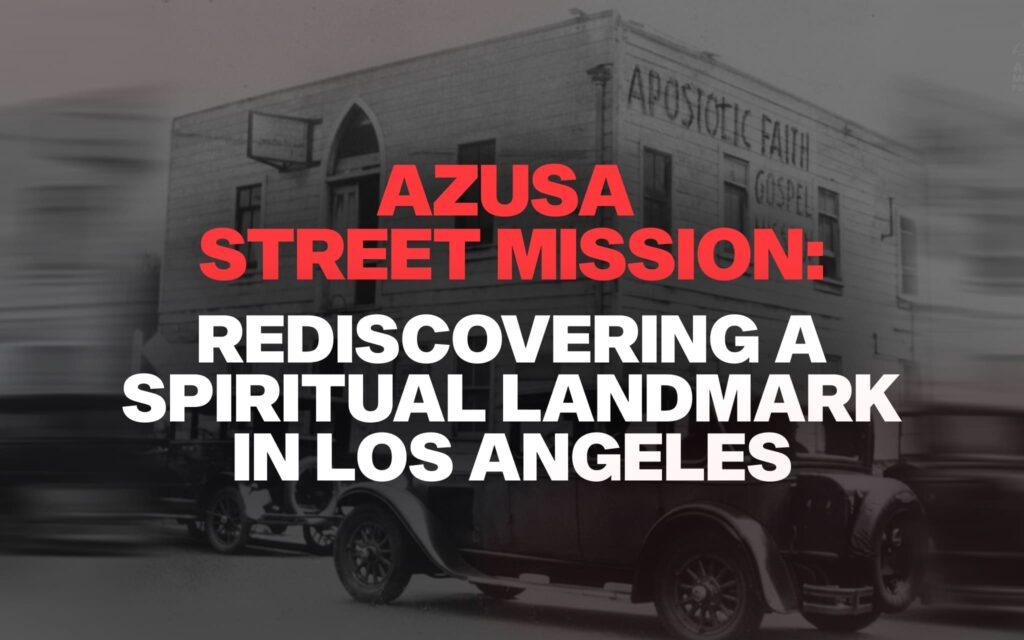

Flickering streetlamps guide you to a modest building that once sparked a global spiritual awakening. The sound of Revival fills your imagination as you approach the original site of the Azusa Street Mission, where history pulses with vibrant energy. This place began when African American preacher William J. Seymour ignited fervent gatherings, forever linking his name to the Azusa Street Mission revival. Located on Azusa Street, this small building radiated a spiritual wave that transcended its walls and reached across the globe.
In the early 1900s, the Azusa Street Mission emerged amid racial segregation yet fostered interracial unity through passionate worship. People traveled far to join the dynamic meetings at the church, where spontaneous prayer, singing, and spiritual expressions thrived. The walls of that mission echoed with declarations of healing and hope, and the name “Azusa” became synonymous with a seismic movement in Christian faith.
The mission’s origin is not just a story of a building—it’s the beginning of something much larger. From its humble location on Azusa Street, this church changed worship forever, inspiring Pentecostal practice worldwide. Those early gatherings transformed perceptions of spiritual outreach and set a new benchmark for collective religious experience.
Historical Impact and Ongoing Legacy
The Azusa Street Mission’s influence did not fade with time; it propagated a global Pentecostal movement still vibrant today. Through fervent worship and testimonies, this building on Azusa Street became a beacon that attracted leaders from all over the world. Spiritual leaders credit those early days at the mission as foundational to their own ministry journeys.
Perhaps most remarkable is how the Azusa Street Mission introduced interracial worship during a time of intense segregation. By breaking down racial barriers, the church cultivated unity that seemed impossible elsewhere. This mission’s example continues to mold modern faith communities, emphasizing inclusivity and spiritual empowerment.
Today, the legacy of the Azusa Street Mission echoes in churches across continents. Pilgrims and curious visitors alike stand in awe when they realize how that single, simple location on Azusa Street reshaped religious landscapes. Its ongoing legacy reminds us that profound change often begins in the most unexpected places.
Visiting the Azusa Street Mission & Historical Society
Walking into the Azusa Street Mission & Historical Society today, you’ll experience a palpable sense of reverence. Artifacts from the original mission—books, letters, photographs—line the exhibits, offering insight into daily life and worship gatherings. Each display conveys the church’s story: its struggles, breakthroughs, and its unfading spiritual glow.
The building is modest yet carefully preserved, allowing visitors to step back in time and feel the same atmosphere that once ignited global fervor. On-site guides recount firsthand stories of those early worship services at the mission and explain how the site weathered the challenges of the 20th century. Attention to detail ensures visitors leave with a deep appreciation for what unfolded at that location.
Its location near downtown Los Angeles makes the mission accessible as a place of pilgrimage or casual curiosity. Travelers can easily integrate it into a wider LA itinerary. The Historical Society also hosts occasional talks and small gatherings to explore the mission’s continuing relevance, reinforcing that the story of Azusa Street Mission remains alive and impactful.
Perception and Transformation: A Visit to the World of Illusions
Just a short distance from the weight of spiritual history lies a playful testament to human perception: the World of Illusions. Here, visitors shift from reflective awe to creative wonder as they explore the Giant’s House, where furniture towers around you, shattering scale and perspective. Every object feels monumental, reminding us how our surroundings shape our worldview.
Next, the Museum of Illusions greets you with vivid 3D paintings that leap off the walls, inviting interaction and photography. These intricate illusions echo the idea of shifting perception—a theme not unlike the expanded vision sparked at the mission. You begin to sense a surprising continuity: both places challenge how we perceive reality, one through worship, the other through visual surprise.
Then comes the Upside‑Down House, where gravity is playfully defied. Seven rooms hang inverted, compelling you to tilt your head and laugh at the disorientation. Finally, the Smash It! exhibit offers a release of emotion, letting visitors write frustrations on plates and break them against walls. That cathartic action resonates with the catharsis experienced by many early worshippers at the Azusa Street Mission—transformative, cleansing, unforgettable.
What is the Azusa Street Mission and why is it significant?
The Azusa Street Mission is a historic religious site in Los Angeles known as the birthplace of the modern Pentecostal movement. Located on Azusa Street, the mission sparked a global spiritual revival in the early 1900s that continues to influence Christian worship practices today.
Where can I visit the Azusa Street Mission today?
Visitors can explore the Azusa Street Mission & Historical Society at its original location on Azusa Street in Los Angeles. The site preserves the mission’s legacy through artifacts, photos, and displays that document the impact of the revival that began at the mission.
Are there other attractions near the Azusa Street Mission in Los Angeles?
Yes, nearby attractions include the World of Illusions, a visual experience featuring interactive exhibits like the Museum of Illusions, the Upside-Down House, the Giant’s House, and Smash It! These immersive displays provide a vibrant contrast to the reflective atmosphere of the Azusa Street Mission.