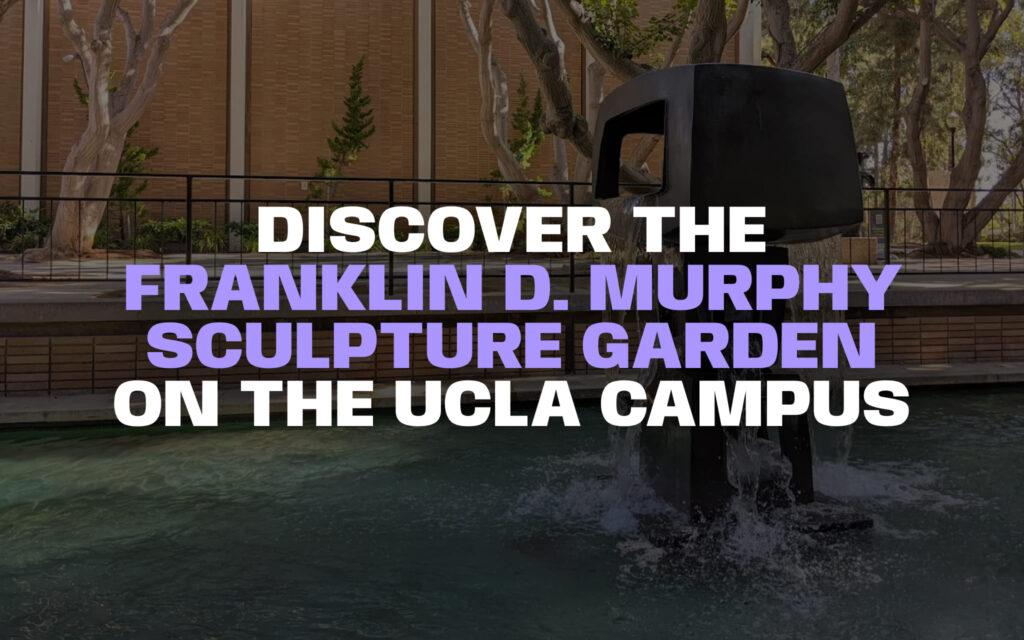

Step onto the lush lawns and you immediately sense the bold vision of Chancellor Franklin D. Murphy. In 1960, Franklin D. Murphy transformed a dusty parking lot at UCLA into a sprawling art landscape. His goal was clear: bring sculpture into everyday life by creating a garden that blended academic pursuit with aesthetic delight in Los Angeles, CA.
Built by landscape architect Ralph Cornell and formally dedicated in 1967, the Franklin D. Murphy Sculpture Garden spans over five acres and features more than seventy sculptures. Each piece is thoughtfully placed along winding paths, among coral trees, eucalyptus, and jacarandas. This living outdoor gallery enhances the university’s modernist architecture, offering both inspiration and repose.
Murphy’s dedication didn’t stop at location. He strategically acquired works by world-class sculptors—like Henry Moore, Auguste Rodin, and Barbara Hepworth—to elevate the garden into a premier cultural landmark. Today, the Franklin D. Murphy Sculpture Garden continues his mission, serving as a daily encounter with art for students, faculty, and visitors in Los Angeles, CA. His vision proved enduring: over half a century later, the garden still merges public space with intellectual discovery.
A Diverse Collection of Sculpture and Artistic Movements
Wander across the grass and you’ll encounter a dynamic mix of figurative and abstract sculpture. David Smith’s geometric sculpture “Cubi XX,” towering Richard Serra sculpture “T.E.U.C.L.A.,” and Jean Arp’s organic forms—all reflect diverse art movements. Each piece is embedded in the garden’s flowing landscape.
Barbara Hepworth’s smooth ovoid shapes offer serene counterpoint to Alexander Calder’s kinetic mobiles and Henry Moore’s reclining figures. Isamu Noguchi’s peaceful “Garden Elements” and Deborah Butterfield’s driftwood-inspired equine form bring texture and material variety. Together, these works form a layered narrative of 20th-century sculpture, inviting comparisons in scale, material, and concept.
This collection isn’t static: the Franklin D. Murphy Sculpture Garden continues to grow with new acquisitions and rotating installations. Its open-air format invites casual engagement—touch, stroll, or linger near the works. Immersion in this evolving exhibition fosters a deeper appreciation of how sculpture interacts with Los Angeles, CA light, air, and environment. The garden becomes a space for reflection and rediscovery, where returning visitors always find something new to notice.
What to Expect When You Visit
Entering from campus, you’ll first step onto a formal plaza flanked by raised terraces and framed by specimen trees. These terraces transition gently into open lawns, where sculpture punctuates the natural setting. The Franklin D. Murphy Sculpture Garden is easily accessible from UCLA’s north campus and the Hammer Museum, allowing for a seamless cultural visit.
The experience is varied: shade offerings under eucalyptus and coral trees, open hillocks ideal for picnicking or reading, and secluded benches tucked among abstract works. Asphalt pathways lead you past notable pieces like Rodin’s “Walking Man,” Calder’s “Button Flower,” and lyrical Henry Moore figures, making every route a visual journey. Even the placement of each sculpture invites personal interpretation, with the surrounding landscape acting as a collaborator in the viewing experience.
As you explore, expect a blend of campus energy and contemplative calm. Students sketch or study by a sculpture; faculty lead art classes along winding paths. Whether you seek creative inspiration or peaceful reflection, the Franklin D. Murphy garden is a serene and stimulating retreat in Los Angeles, CA. This isn’t just a park—it’s an open-air museum, a cultural gift available to all who pass through.
Expanding the Artistic Experience: World of Illusions in Los Angeles
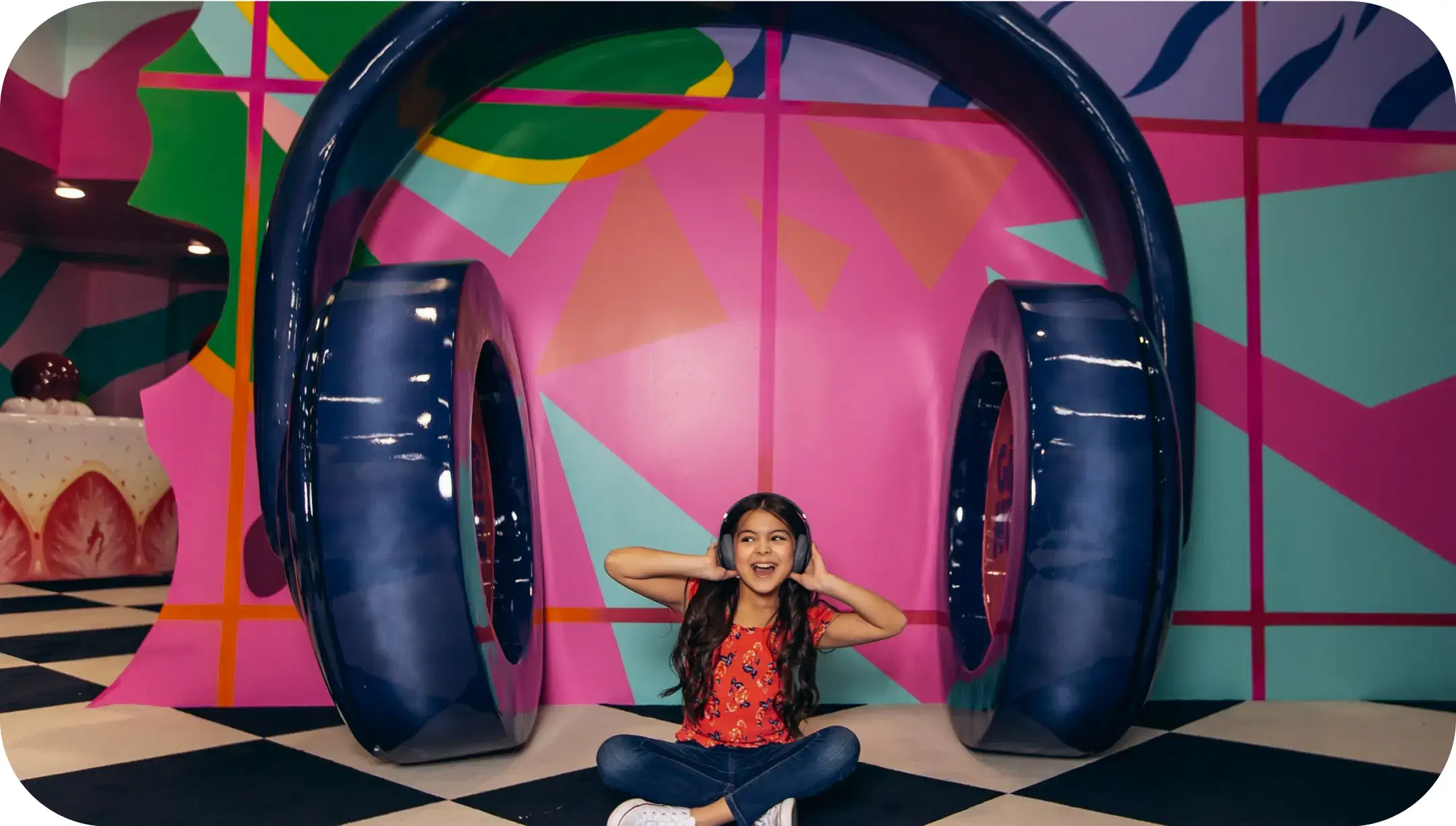
While the Franklin D. Murphy Sculpture Garden offers steady, contemplative engagement, nearby Los Angeles attractions like the World of Illusions inject a surprising twist of sensory play. At the Giant’s House, everyday objects tower over you—shifting your perspective much like abstract sculpture shifts form. Walking between a giant comb and coffee mug turns the familiar into something monumental and surreal.
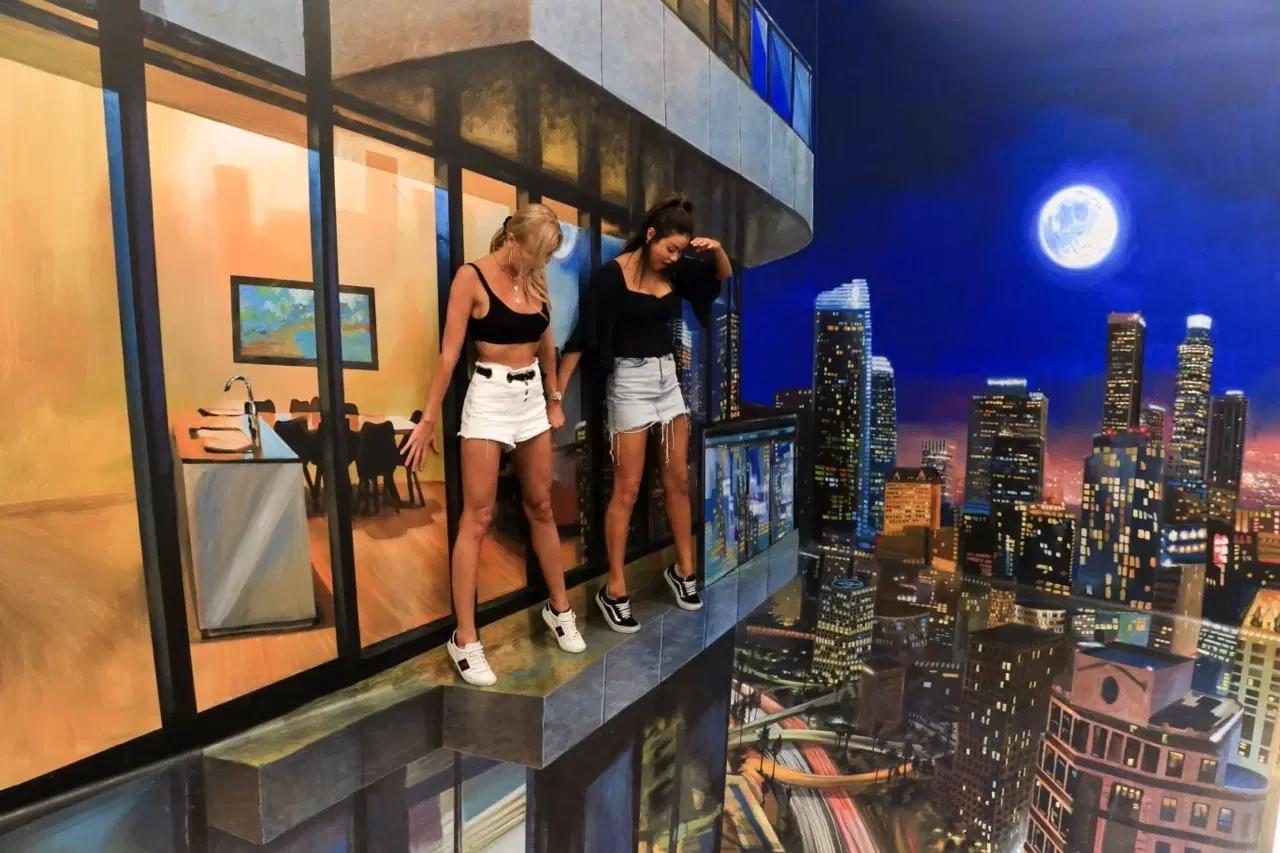
In Smash It!, visitors release captured emotions by smashing plates—a performance of movement and form that echoes the expressive energy of outdoor sculpture. The Museum of Illusions adds optical intrigue, with walls painted to trick perception—each scene almost like sculpted dimensions frozen in paint. Visitors pose, laugh, and engage with the illusions as if they were kinetic art pieces themselves.
Finally, the Upside-Down House flips expectations of gravity and space, forming a three-dimensional environment that comports with the way a sculpture can turn a passive viewer into active explorer. Together with the Franklin D. Murphy Sculpture Garden, these immersive exhibits illustrate how art in Los Angeles, CA can both ground and bend reality. One emphasizes stillness and materiality; the other, motion and trickery—each delivering a distinct encounter with form, space, and imagination.
What makes the Franklin D. Murphy Sculpture Garden at UCLA unique?
The Franklin D. Murphy Sculpture garden offers over 70 modern and contemporary sculpture pieces by renowned artists in a five-acre outdoor art space. Founded by Franklin D. Murphy, it seamlessly blends academic life and artistic discovery in Los Angeles.
What types of art are in the Franklin D. Murphy Sculpture Garden?
Visitors will find a diverse sculpture collection: abstract pieces by Henry Moore and Jean Arp, figurative works by Auguste Rodin and Gaston Lachaise, plus contemporary steel and bronze forms—all integrated into the garden landscape.
How does the World of Illusions complement my visit to the garden?
The World of Illusions in Los Angeles offers playful, immersive experiences—like the Upside‑Down House, Giant’s House, Smash It!, and Museum of Illusions—that contrast with the reflective atmosphere of the Franklin D. Murphy Sculpture garden, expanding your engagement with form and perception.