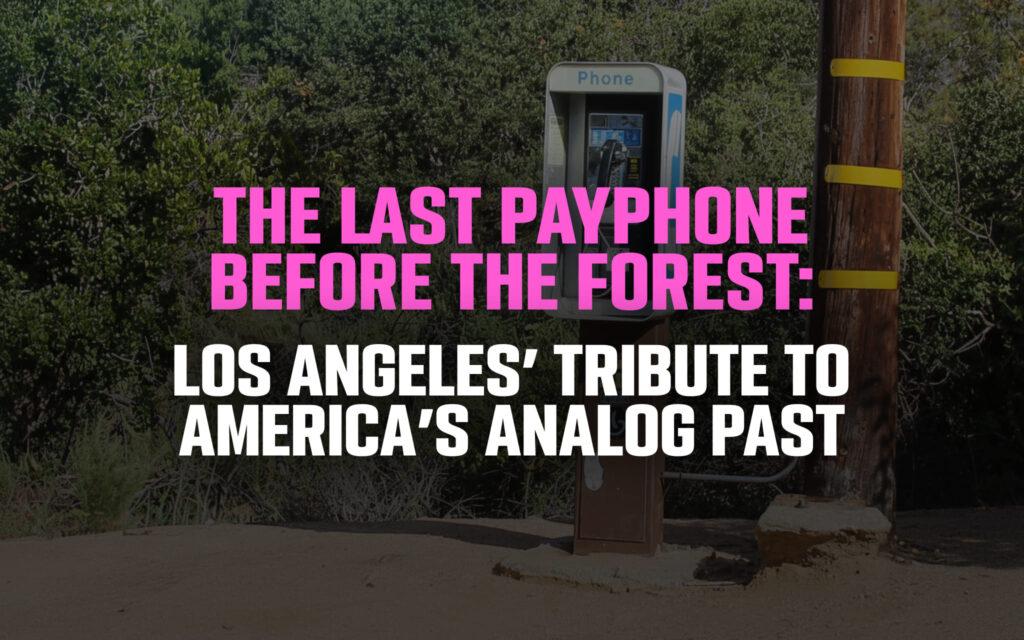

Just before the trees close in and the road narrows along the Angeles Crest Highway, an unlikely monument to another era stands beneath the sky: the Last Payphone Before the Forest. There’s no neon sign, no plaque—just a coin-fed receiver bolted to time itself on the way out of Los Angeles and into the trees. Located just past La Cañada Flintridge in the outskirts of Los Angeles, this functioning payphone still waits for a quarter and a voice. It’s not marked with flashing lights or dramatic signs—but it pulls people in all the same.
This lone payphone serves as a liminal checkpoint between two realities. Behind you lies the city of Los Angeles, pulsing with traffic and constant connection. Ahead is the San Gabriel Mountains’ vast expanse—majestic, unpredictable, and often without cell service. The payphone becomes a curious final lifeline before the wilderness unfolds. In a world where everything is instant, this physical link to someone, somewhere, feels strangely vital.
Few objects carry the kind of quiet mystique this one does. Its location feels deliberate, as if America left behind a single analog whisper just in case you needed to hear a human voice. Travelers pull over to see it not because they need to call someone—but because it still exists. In a city famous for its sprawl and change, the Last Payphone remains a rare constant.
Why the Last Payphone Matters in the Digital Age
In an era dominated by smartphones, the sight of a payphone—let alone a working one—can be startling. But this isn’t just any payphone; it’s believed to be one of the last fully operational, roadside public payphones remaining in active use in Los Angeles. It has become a quiet symbol of America’s analog past clinging to life in a digital world.
For hikers and campers headed into the Angeles National Forest, the payphone has practical value. Reception fades fast in the mountains, and when emergencies arise, that steel receiver can mean the difference between help and isolation. Yet the real power of the payphone isn’t just its utility—it’s the sense of reassurance it gives. America once depended on these devices, and this one still fulfills that role, day after day.
The payphone also attracts those drawn to nostalgia. Tourists, documentary filmmakers, and photographers all make pilgrimages to capture this simple artifact of a bygone time. It’s a tactile reminder of how far technology has come—and how something as small as a ringing phone booth can make you pause. Los Angeles has plenty of icons, but this last payphone is an unexpected one that speaks volumes.
A Cultural Landmark of Rural America
Though it’s just a phone on a post, the payphone has become a cultural touchstone, especially for lovers of Americana. It marks the threshold between the controlled chaos of Los Angeles and the untamed serenity of California’s forestland. It serves no grand political or artistic purpose, but somehow, that makes it even more meaningful. In its simplicity, it captures something honest about America.
Roadside culture has long defined the American landscape, from diners and neon signs to motels and gas stations. This payphone now joins that lineage. Travelers from across America seek it out not for a call, but for the memory it triggers. It has even found its way into guidebooks, blog posts, and social media—earning its spot as one of Los Angeles’ quirkiest landmarks.
The fascination lies in its survival. In an age when obsolescence is rapid and relentless, the payphone remains. Maintained quietly and without fanfare, it holds space for something rare: continuity. And while it may not be grand, the Last Payphone reminds us of the unglamorous but dependable pieces of America that once connected millions.
Connecting Experiences in Unexpected Ways
Just like a surprise encounter with a payphone in the woods, the World of Illusions in Los Angeles challenges expectations in delightfully disorienting ways. This modern attraction delivers an immersive, analog-meets-digital experience rooted in perception and physical presence—just like finding a real phone that still works in a wireless world.
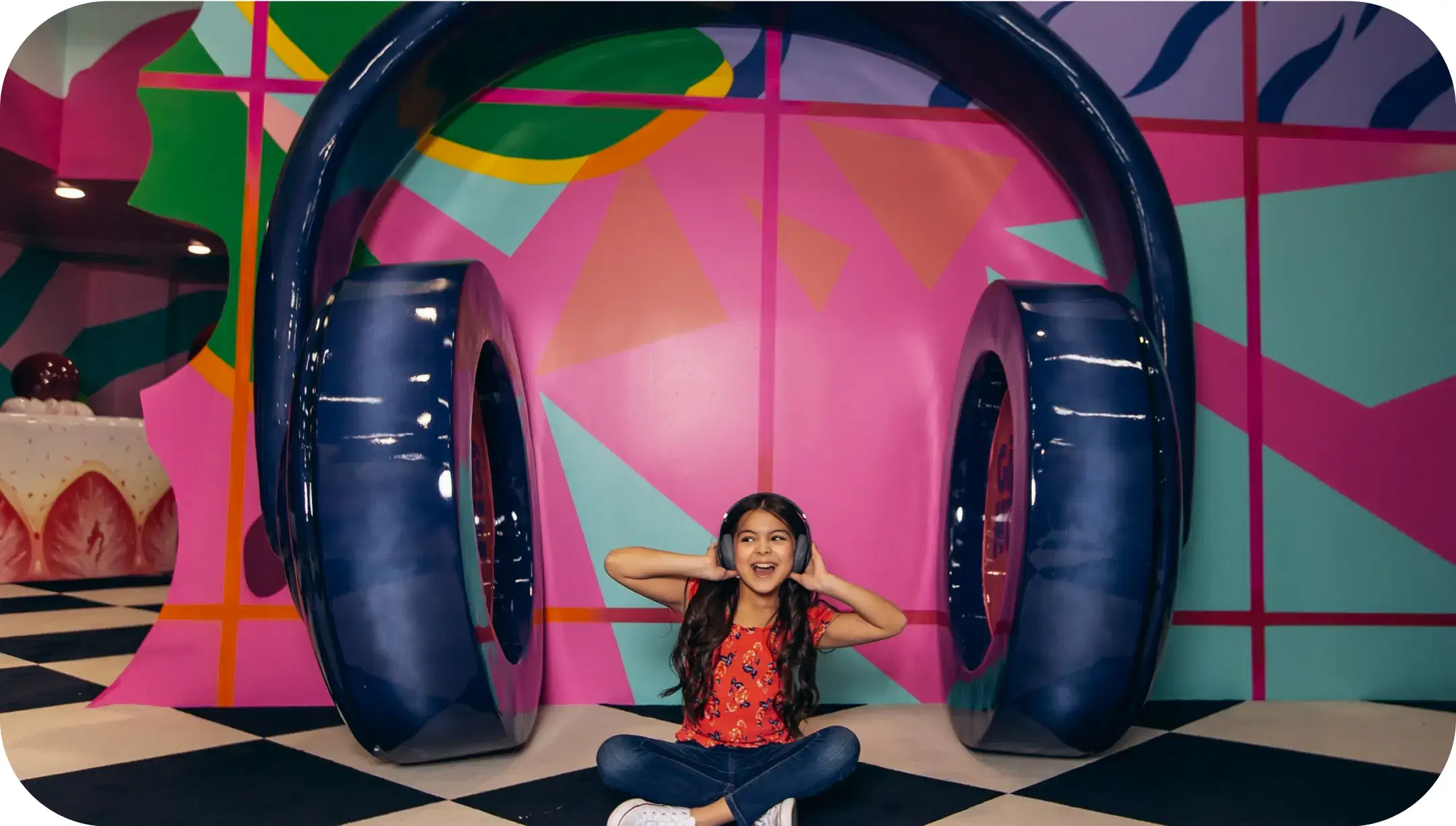
Inside, the Giant’s House distorts scale, making visitors feel miniature as they explore oversized everyday objects. Smash It! offers a release from digital overload—guests write frustrations on plates and shatter them in a controlled, cathartic act. The Museum of Illusions wraps you in 3D wall art that seems to move with you, while the Upside Down House flips perspective entirely with seven inverted rooms that scramble your sense of orientation.
Both the World of Illusions and the Last Payphone offer physical experiences that resist replacement by digital screens. In a city where virtual dominates, these places reconnect you to touch, space, and moment. One plays with perception, the other with memory—but both create emotional impressions that linger. In a city as diverse as Los Angeles, that kind of connection still matters.
Tips for Visiting the Last Payphone
If you’re planning to see the Last Payphone Before the Forest, head northeast from Los Angeles on the Angeles Crest Highway (CA-2). A short drive past La Cañada Flintridge, you’ll spot it near a turnout not far from the Clear Creek Information Center. Parking is limited but usually sufficient, especially during weekdays. Morning or early evening visits offer the best light and fewer crowds.
Come prepared for a brief stop or a launching point into the forest. Bring quarters if you want to use the payphone—yes, it works. The area can be breezy, and in colder months, it gets surprisingly chilly due to elevation. While the surroundings are beautiful, remember this is still an active road; stay alert when exiting your vehicle and walking around.
If you’re continuing into Angeles National Forest, the payphone marks a smart place to check in with someone or confirm directions. There’s something poetic about making a call from one of America’s last roadside phones before heading into the wild. Whether it’s for practicality or posterity, this is a moment you’ll remember.
Preserving a Piece of America
The Last Payphone Before the Forest has endured because people value it. Locals and curious travelers often check in on it, clean up around it, and spread the word of its existence. This quiet form of stewardship has kept the device from becoming another casualty of progress. In doing so, they’ve preserved a very tangible piece of America’s communication past.
Payphones once dotted every corner of American cities. Now they are vanishing, with the last holdouts celebrated as novelties rather than necessities. But this one in Los Angeles holds a different weight—because it still serves a purpose. It connects those few who may need it and those many who simply want to see it. And every time it rings, it reminds us that not everything has to disappear.
In a world that often moves too fast, the payphone remains—unchanged, unassuming, but undeniably symbolic. It captures the rhythm of a different America, one where calls were made from booths and waiting wasn’t an inconvenience. That’s why people keep coming, keep calling, and keep remembering this one small place that still listens.
Is this really the last payphone in America?
No, while often referred to as the last payphone in Los Angeles before entering the forest, it is not the last payphone in America. There are still thousands of payphones scattered across the country, though this one remains one of the most iconic due to its remote location and cultural symbolism.
Why is the Last Payphone Before the Forest considered significant?
This payphone is considered significant because it serves as a symbolic boundary between urban Los Angeles and the natural wilderness beyond. It represents a fading piece of America’s communication history and offers a rare, functioning public payphone experience that reminds people of what life was like before constant connectivity.
Are there similar immersive experiences in Los Angeles?
Yes, the World of Illusions in Los Angeles offers another kind of surprise for visitors. Like discovering the last payphone, it provides a physical, thought-provoking encounter. Guests can explore the Upside Down House, Giant’s House, Museum of Illusions, and Smash It!—each offering a unique twist on reality and perception in modern America.