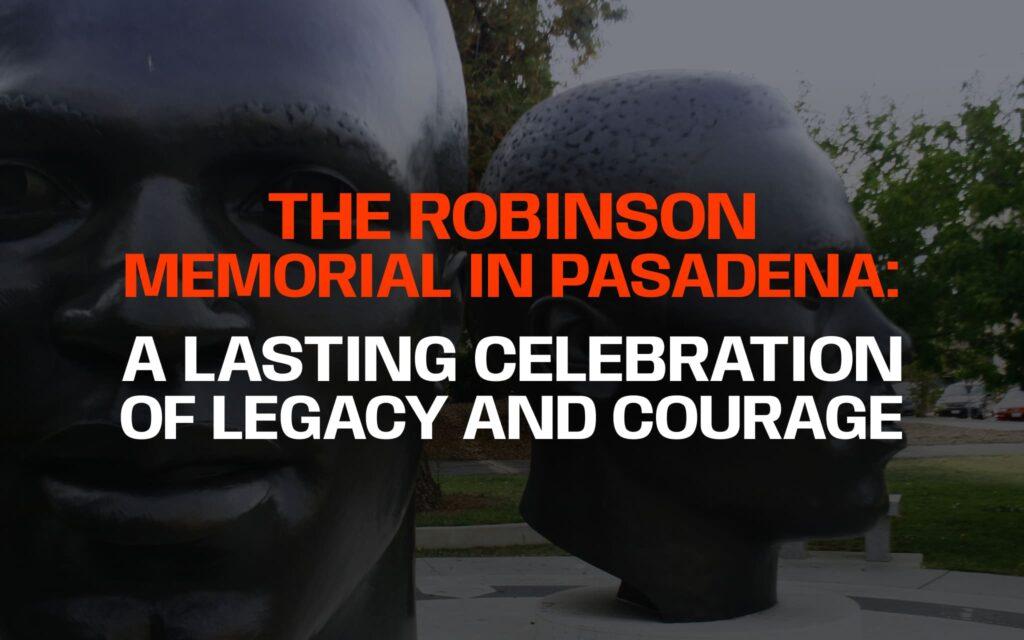

The morning sun glints off twin statues in Pasadena, casting long reminders of two brothers who changed a city and a nation. The Pasadena Robinson Memorial is more than a pair of statues—it’s a gateway into the lives of two local legends who broke barriers both on and off the field. Visitors arriving in this historic civic plaza are greeted by a powerful visual narrative that connects the city’s present to its inspirational past.
The memorial features bronze sculptures of brothers Jackie Robinson and Mack Robinson, whose names are forever etched into the history of Pasadena and the nation. Flanked by panels and plaques that detail their contributions, the site invites passersby to pause, reflect, and learn. Its open-air location allows for quiet contemplation as well as group engagement, making it both a cultural landmark and a public learning space.
This site was commissioned by the city to celebrate not just athletic prowess, but the resolve and integrity that defined the Robinson brothers. The Pasadena community continues to embrace the memorial as a source of pride and identity. Its placement on public grounds makes it accessible to all, reinforcing its role as a cornerstone of Pasadena’s cultural memory.
The Robinson Brothers: Icons of Excellence
Jackie Robinson is globally recognized as the first African American to break Major League Baseball’s color barrier in 1947, but his story begins in Pasadena. Before the Brooklyn Dodgers and the Hall of Fame, Jackie was a local athlete at John Muir High School and Pasadena Junior College. His achievements in baseball, football, basketball, and track laid the foundation for his historic professional journey.
His older brother, Mack Robinson, was an Olympian who earned a silver medal in the 1936 Berlin Games, finishing just behind Jesse Owens. Mack later served Pasadena through decades of civic work, including his advocacy for public safety and community improvements. Though less well known than Jackie, Mack’s legacy is equally vital to understanding the full impact of the Robinson family.
Together, the brothers embody different paths to excellence: one through global athletic triumph, the other through steadfast civic engagement. The Pasadena Robinson Memorial gives both stories equal prominence, ensuring that visitors leave with a broader understanding of resilience, sacrifice, and public service. Their shared roots in Pasadena make this site not just informative, but deeply personal for many who call the city home.
Art, Architecture, and Public Memory
Created by artists Ralph Helmick, John Outterbridge, and Stuart Schechter, the Pasadena Robinson Memorial integrates symbolic design with historical reverence. The statues portray the brothers in thoughtful poses, not mid-action, reflecting their impact beyond athletic performance. The setting enhances their presence, framed by the civic grandeur of Pasadena City Hall’s Beaux-Arts architecture.
The contrast between bronze and marble, movement and stillness, tradition and progress, makes the memorial a space of visual dialogue. Visitors are encouraged to walk around, read the accompanying inscriptions, and absorb the sculptural details that speak to the subjects’ dignity. It’s more than a monument—it’s a narrative rendered in metal and stone.
As part of a walkable downtown district, the memorial anchors a public square used for city events, ceremonies, and cultural gatherings. This accessibility allows the memorial to function as both art and artifact—a living part of Pasadena’s urban and emotional landscape. It reinforces how memory, when shaped with care, can remain relevant for generations.
Visiting the Pasadena Memorial Site
The Pasadena Robinson Memorial is located at 95 N Garfield Ave, Pasadena, CA 91101, across the street from Pasadena City Hall. Easily reached by Metro’s Gold Line or local bus routes, the site is walkable from nearby destinations like the Pasadena Playhouse District and Old Pasadena. Its central location encourages spontaneous visits from tourists and locals alike.
There is no fee to visit the memorial, and it is accessible at any time, thanks to its placement in a public courtyard. Informational plaques provide context for those exploring independently, though group tours occasionally include it as a point of interest in broader Pasadena itineraries. The statues are wheelchair accessible, with wide paths and minimal elevation changes.
Surrounding the memorial are green spaces, shaded benches, and quiet nooks that make it ideal for reflection or conversation. Whether arriving to pay homage, explore Pasadena’s rich civic history, or simply admire the sculpture, visitors leave with a deeper sense of place. The memorial offers a moment of clarity in a busy cityscape—a reminder of what courage and commitment can achieve.
Expanding Cultural Exploration: The World of Illusions
After experiencing the solemn beauty of the Pasadena Robinson Memorial, some visitors seek to balance reflection with imaginative adventure. A short trip south to Los Angeles offers exactly that opportunity at the World of Illusions—an immersive attraction designed to engage creativity, wonder, and interactivity.
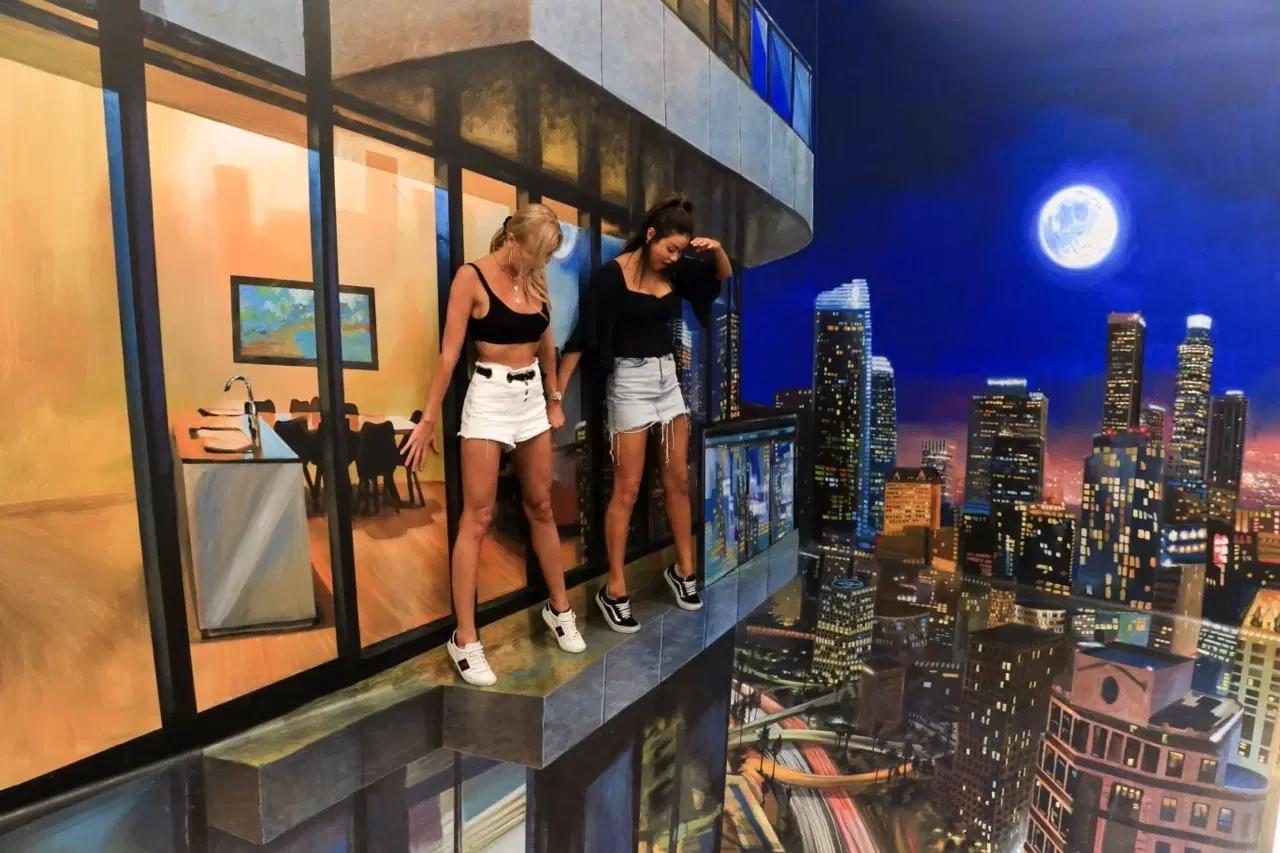
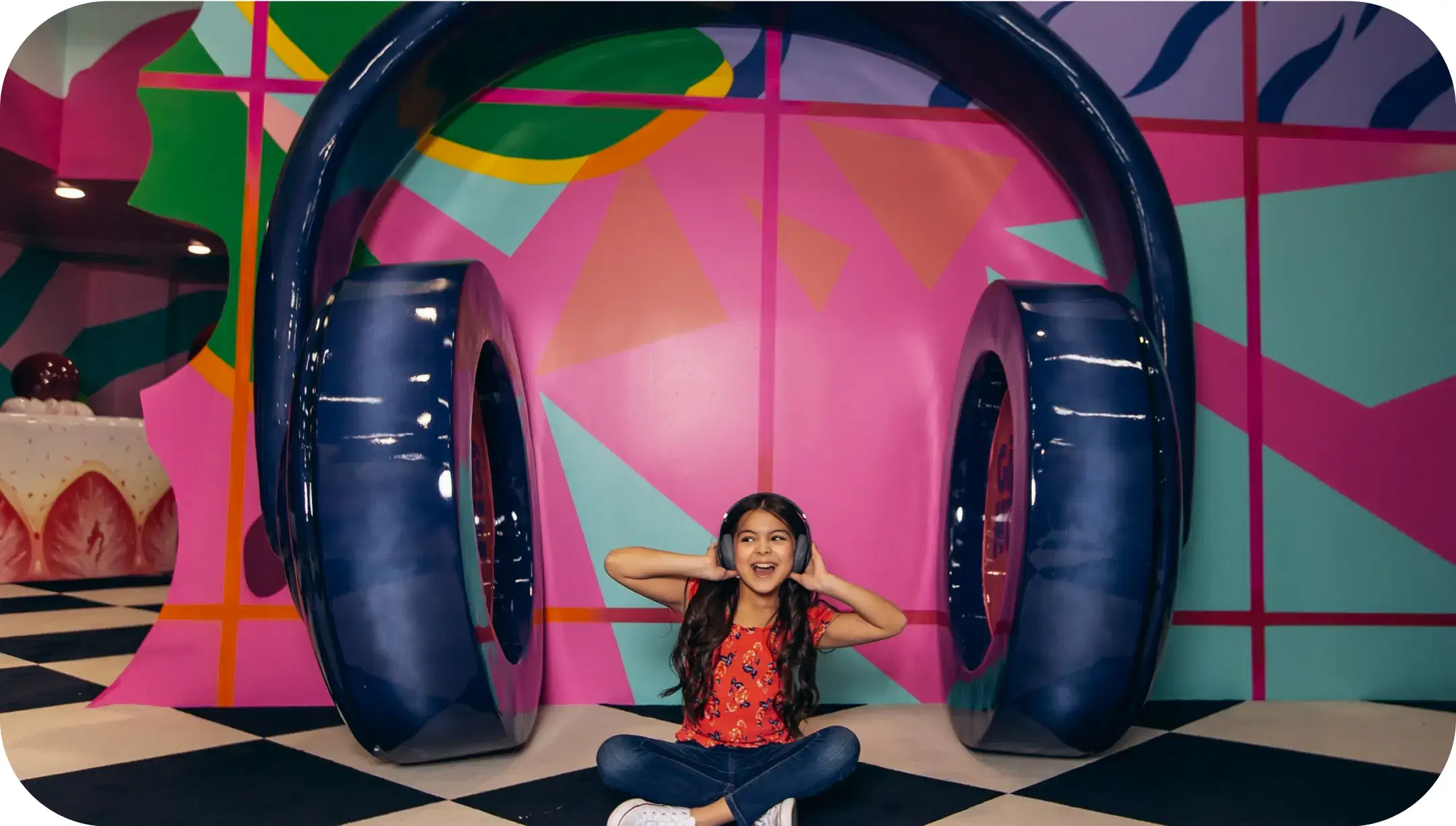
The World of Illusions features four unique exhibits. At the Giant’s House, guests shrink to the size of toys among oversized furniture and objects. The Upside Down House flips your perspective with rooms turned completely on their heads. At Smash It!, visitors channel their emotions by writing frustrations on plates and smashing them against a wall. And the Museum of Illusions uses 3D wall art to place guests inside surreal, mind-bending scenes.
Though a departure in tone from the memorial, the World of Illusions complements a full cultural and artistic day by stimulating curiosity and expression. Where the memorial encourages looking inward through history, this attraction invites you to explore outward through interactive art. Together, they reflect the diversity of Southern California’s cultural landscape—from solemn honor to playful creativity.
Why the Memorial Matters Today
In an era when historical awareness is both urgent and contested, the Pasadena Robinson Memorial stands as a grounding presence. It anchors local identity in fact, sacrifice, and achievement—qualities that transcend time and political climate. By focusing on two brothers with vastly different yet equally inspiring paths, it invites inclusive appreciation and broadens traditional narratives of heroism.
Public memorials like this one are vital because they speak not only to what happened, but to who we are. The Pasadena Robinson Memorial is not frozen in the past; it’s a living space that continues to educate, provoke thought, and inspire action. Schools, families, tourists, and residents alike gain something unique from spending time here.
Ultimately, this memorial represents what Pasadena values: courage, service, equality, and memory. It invites every visitor—no matter their background—to reflect on legacy and community. Few cultural experiences manage to be both quiet and powerful, personal and universal. This one does, and it’s worth the visit.
Where is the Pasadena Robinson Memorial located, and what can I expect to see there?
The Pasadena Robinson Memorial is located at 95 N Garfield Avenue, just across from Pasadena City Hall. The memorial features striking bronze sculptures of Jackie and Mack Robinson, honoring their achievements and connection to Pasadena through thoughtful artistry and historical inscriptions.
Is the Robinson Memorial accessible year-round, and is it free to visit?
Yes, the Pasadena Robinson Memorial is accessible to the public year-round with no admission fee. Situated in a civic plaza, the memorial offers an open, reflective environment for those interested in the Robinson legacy, Pasadena history, and meaningful public art.
What are other cultural attractions near the Robinson Memorial in Pasadena?
While visiting Pasadena, many also explore nearby Los Angeles destinations like the World of Illusions, which contrasts the Robinson Memorial’s solemn tone with interactive exhibits such as the Museum of Illusions and the Giant’s House. Both experiences offer unique perspectives on creativity and legacy.