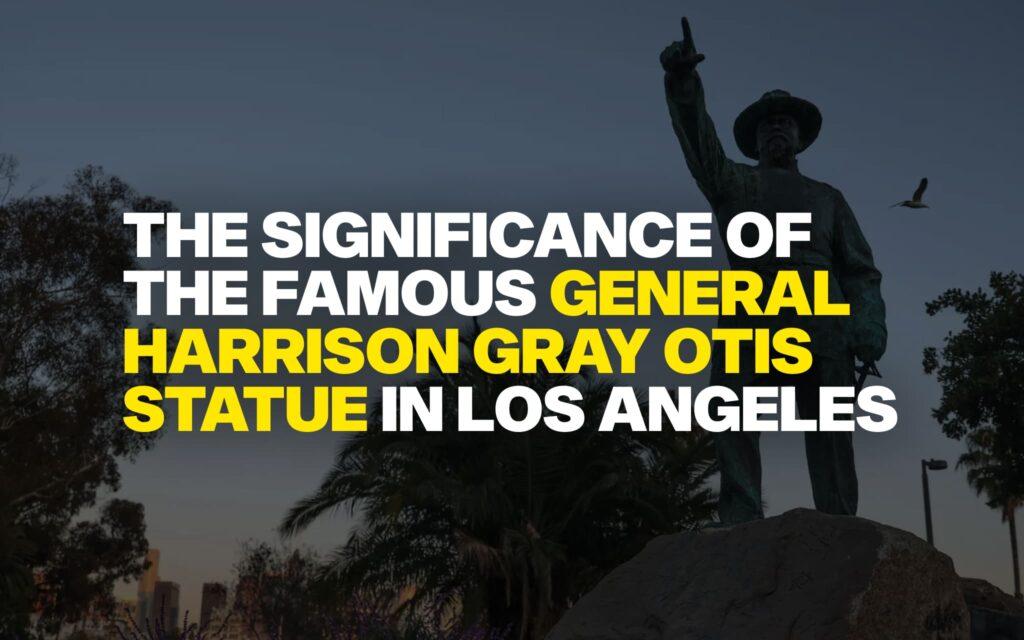

Amidst the urban rhythm of Los Angeles, a solitary statue stands as a silent narrator of the city’s ambitious past. The commanding bronze figure points across Wilshire Boulevard, forever frozen in a gesture that once directed the gaze of Los Angeles toward its future. This is General Harrison Gray Otis, a man whose influence helped shape the city into the sprawling metropolis it is today. As publisher of the Los Angeles Times, Otis wielded the power of the press to advocate for the city’s growth, infrastructure, and civic identity. His name became synonymous with the expansion of both journalism and civic planning across Southern California.
Otis’s contributions extended beyond journalism. He served as a brigadier general during the Spanish-American War and played a pivotal role in real estate development, particularly in the San Fernando Valley. He championed transportation projects, public land expansion, and infrastructure that paved the way for what Los Angeles would become. In many ways, Otis functioned as both a chronicler and an architect of change—someone who did not just report history but helped to write it with influence and strategy.
In recognition of his impact, a statue was commissioned and unveiled in 1920, standing as a testament to his enduring legacy. This monument not only commemorates Otis’s achievements but also serves as a historical marker, reminding residents and visitors alike of the city’s rich past. For many, it represents a time of transformation—when famous figures like Otis guided the direction of an entire region. His story continues to resonate with those who value how visionaries helped shape Los Angeles into the dynamic metropolis we see today.
A Monument Amidst MacArthur Park
Situated at the northwest corner of MacArthur Park, the General Harrison Gray Otis statue is a famous fixture in Los Angeles. Crafted by sculptor Paul Troubetzkoy, the statue originally featured a trio: Otis, a newsboy, and a Spanish-American War soldier. Over time, the soldier was lost to a car accident in the 1930s, and the newsboy was stolen in 2024, leaving only Otis standing sentinel. The remaining figure retains its historical weight, marking the site as one of the most quietly powerful installations among the city’s many famous statues.
The statue’s location is significant. It stands across from Otis’s former residence, which he donated to the city to become the Otis Art Institute, now part of Otis College of Art and Design. This connection emphasizes not only Otis’s impact on civic infrastructure but also his influence on cultural and artistic institutions that continue to thrive in Los Angeles. Its placement in a central, highly visible park underlines its role as a civic landmark, surrounded by the daily motion of a city constantly on the move.
Visitors to MacArthur Park can view the statue and reflect on the famous city’s evolution. The park itself, once known as Westlake Park, has been a central gathering place since the late 19th century, offering a serene environment amidst the urban bustle of Los Angeles. From weekend picnics to historical walking tours, the park provides a unique setting where modern life intersects with the city’s layered past. For many Angelenos, this statue is not only part of a famous public collection but also a personal marker of neighborhood pride and historical memory.
Enduring Significance for Los Angeles Residents
The General Harrison Gray Otis statue holds continued relevance for the people of Los Angeles. It serves as a tangible link to the city’s formative years, embodying the spirit of ambition and progress that characterized Otis’s era. For residents, the statue is more than a historical artifact; it’s a symbol of the city’s enduring drive toward growth and innovation. In an age of rapid change, the bronze figure of Otis reminds viewers that long-term vision and principled leadership are not relics of the past—they remain vital forces today.
In a city dotted with famous statues, this monument stands out for its direct association with the development of Los Angeles. It invites contemplation on the power of media, the impact of civic leadership, and the importance of commemorating those who have shaped the urban landscape. From journalists to community organizers, Otis’s story resonates with those who believe in the transformative power of civic participation. His legacy exists not only in stone and metal but in the very layout and momentum of the city.
Engaging with the statue offers an opportunity for residents to connect with their city’s history, fostering a sense of pride and continuity. It becomes a touchstone for public memory, anchoring civic identity through the lens of a single life well documented. Whether you’re a longtime Angeleno or a recent arrival, standing before the Otis statue provides a moment of reflection—a rare pause in a fast-paced city that never sleeps. It reminds all who pass by that the roots of Los Angeles are deep, and its famous figures still speak across generations.
Exploring Visual Perspectives
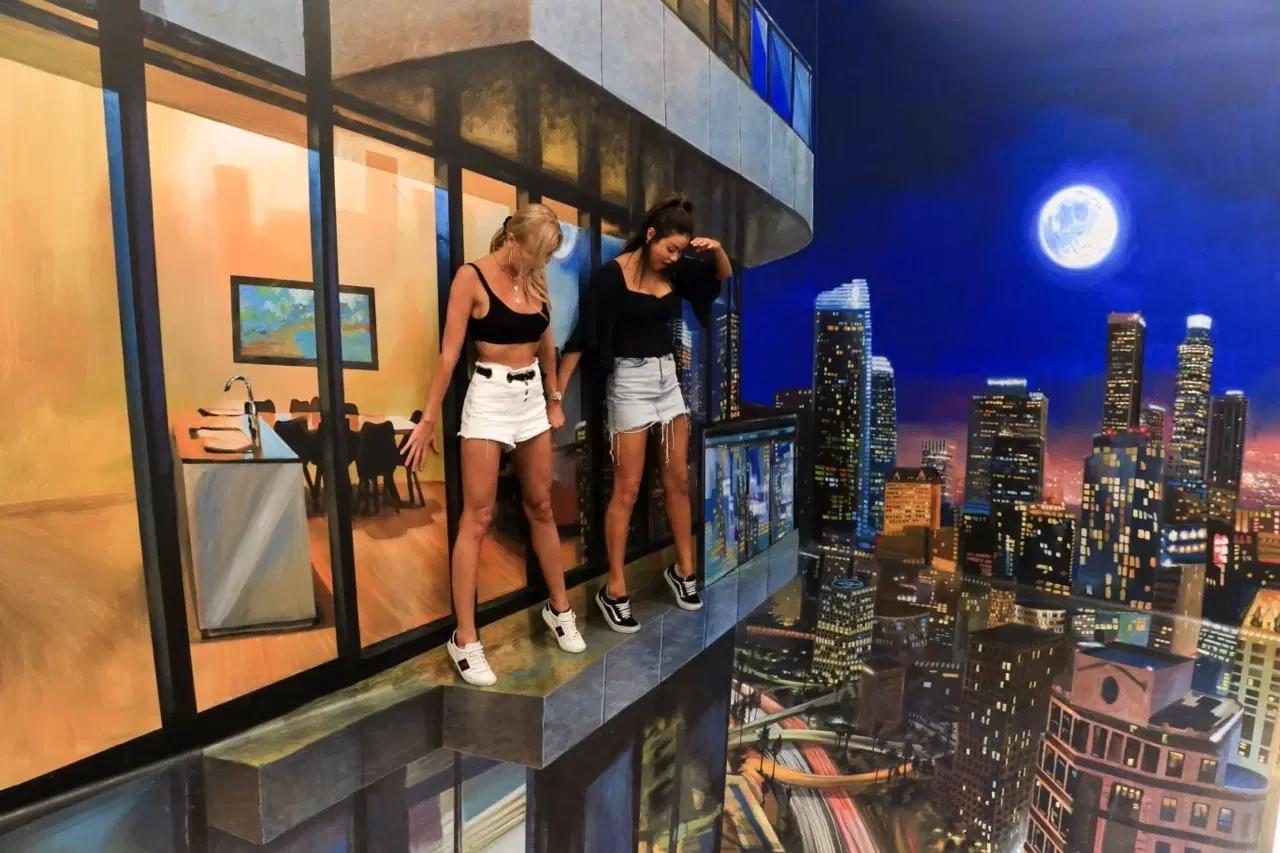
Just a short distance from MacArthur Park lies the famous World of Illusions, an interactive museum that offers a modern take on visual storytelling. Among its exhibits is the Museum of Illusions, featuring over 30 3D artworks that play with perspective and challenge viewers’ perceptions. These illusions provide a playful contrast to the solemnity of traditional statues, inviting visitors to become part of the art. By stepping inside the scene, guests transform static murals into dynamic visual experiences—blending reality, imagination, and fun.
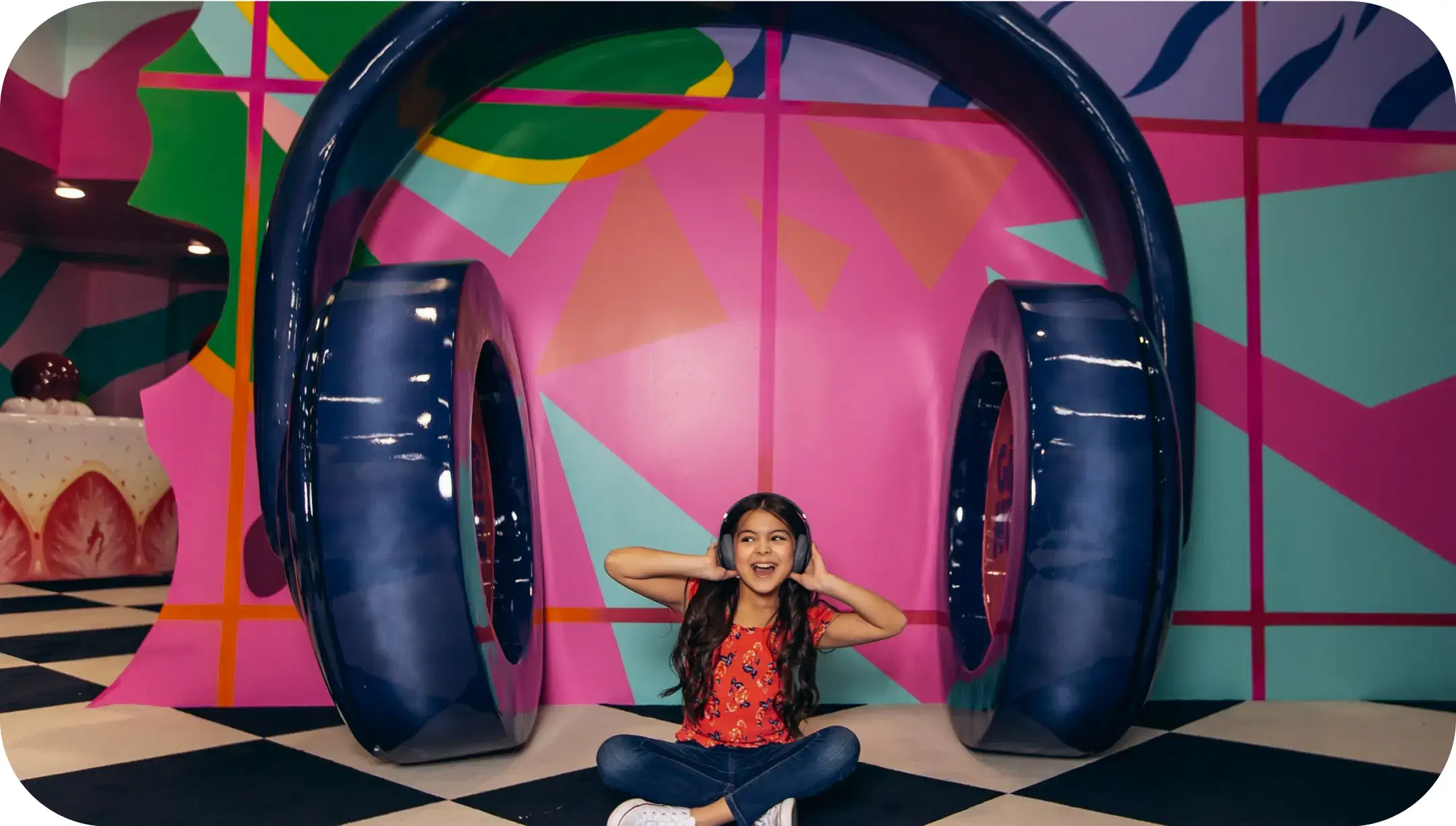
The Giant’s House is another highlight, where oversized everyday objects create a whimsical environment that makes guests feel miniature. Giant furniture, utensils, and props flip everyday reality, offering guests the chance to interact with visual scale in a hands-on way. Much like the Otis statue challenges people to view history through a focused lens, the Giant’s House uses physical exaggeration to shift perception and ignite curiosity about the world around us.
For those seeking a more active experience, Smash It! offers a cathartic outlet by allowing visitors to write on plates and smash them against a wall. The raw, unscripted release of frustration taps into something deeply human—providing both stress relief and emotional expression. And if that weren’t enough, the Upside Down House flips every expectation, presenting seven rooms where furniture clings to the ceiling and gravity seems to vanish. These exhibits celebrate the creative reinterpretation of physical space, serving as a contemporary counterpoint to the structured permanence of statues. Both forms of art—traditional and immersive—highlight the diversity of expression that defines modern Los Angeles.
Visiting MacArthur Park and Nearby Attractions
MacArthur Park is accessible via the Westlake/MacArthur Park station, making it convenient for both locals and tourists. The famous park offers a variety of amenities, including walking paths, a lake, and open spaces for relaxation. Its grassy areas and central location make it ideal for lunch breaks, weekend gatherings, and historical exploration. For those seeking a blend of cultural enrichment and leisure, it remains one of the most accessible destinations in Los Angeles.
After visiting the General Harrison Gray Otis statue, guests can explore other famous statues throughout the city, such as the Statue of Óscar Romero, also located in MacArthur Park. From Civic Center to Grand Avenue, the city hosts dozens of artistic tributes that each tell part of Los Angeles’s story. Whether celebrating social justice, artistic innovation, or military service, these statues share a visual language of remembrance and identity.
Where is the General Harrison Gray Otis statue located in Los Angeles?
The General Harrison Gray Otis statue is located at the northwest corner of MacArthur Park in Los Angeles. It’s one of several famous commemorative statues that reflect the city’s historical legacy. Many visitors explore it as part of a broader tour of Angeles landmarks celebrating influential civic figures.
How does the World of Illusions compare to traditional statues in Los Angeles?
How does the World of Illusions compare to traditional statues in Los Angeles?
Why do Los Angeles residents value public statues?
In Angeles, famous statues help preserve cultural identity and connect modern life to foundational figures in the city’s past. Monuments like the Otis statue offer a sense of continuity and pride, giving residents visible reminders of how visionaries helped shape Los Angeles into a thriving urban landscape.