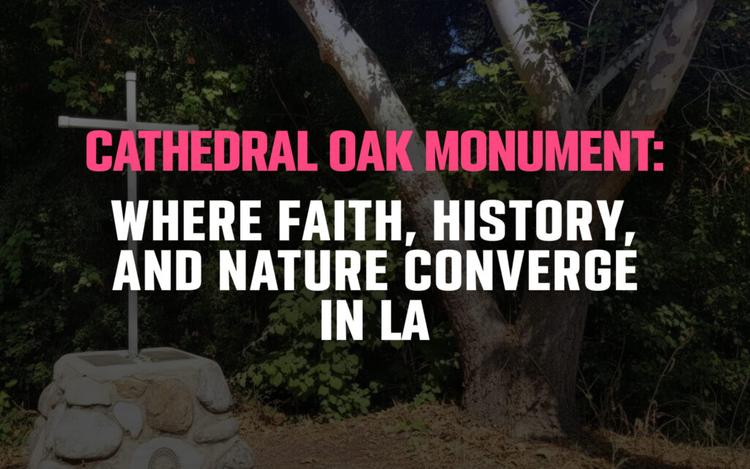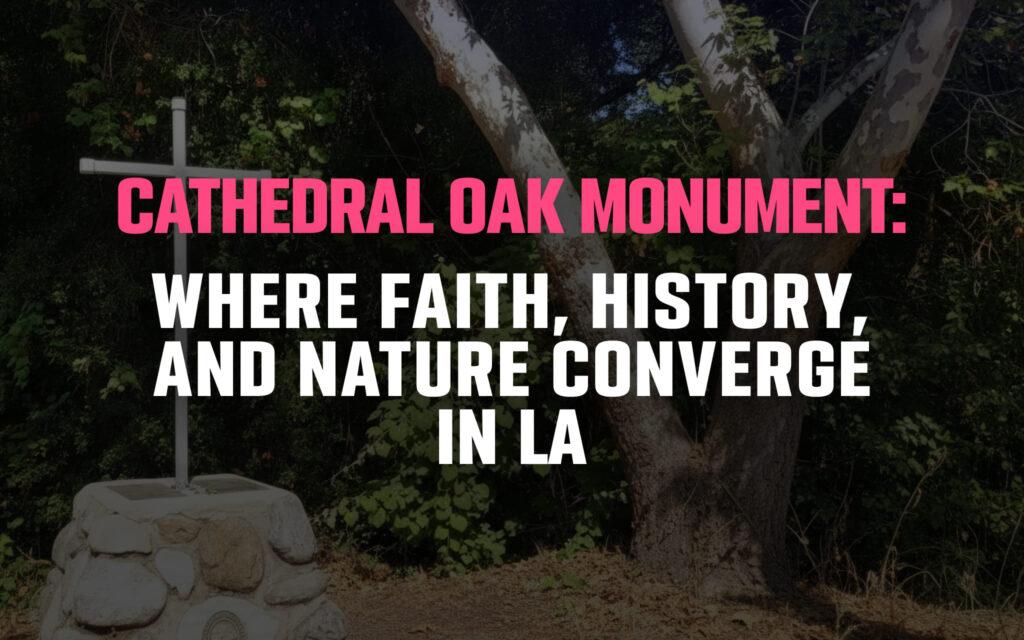

In the quiet neighborhood of South Pasadena, a modest yet profound monument stands as a testament to California’s early history. The Cathedral Oak Monument marks the site where, in 1770, the first Easter service in California was reportedly held under a grand oak tree during the second Portolà Expedition. Led by Gaspar de Portolà, this expedition was pivotal in establishing Spanish presence in Alta California. The oak tree, under which this significant event took place, became a symbol of spiritual and cultural beginnings in the region.
Today, a simple metal cross atop a stone base commemorates the original Cathedral Oak, which stood until 1952. This unassuming monument invites visitors to reflect on the layers of history embedded in Los Angeles’ landscape. The term “Cathedral” in its name underscores the sacredness of the site, while “oak” signifies strength and endurance. Together, they encapsulate the essence of a place where nature and spirituality once intertwined.
The monument’s significance extends beyond its physical presence. It serves as a reminder of the diverse narratives that have shaped Los Angeles. For those interested in the confluence of history, culture, and nature, the Cathedral Oak Monument offers a unique glimpse into the city’s multifaceted past.
Where to Find the Cathedral Oak Monument
Located at 430 Arroyo Drive in South Pasadena, the Cathedral Oak Monument is easily accessible to visitors exploring the greater Los Angeles area. The site is situated near the Arroyo Seco, a natural watercourse that has been integral to the region’s development. Its proximity to major thoroughfares makes it a convenient stop for those interested in historical landmarks.
While the monument itself is modest, the surrounding area offers a peaceful environment for contemplation. Visitors can enjoy a leisurely walk, taking in the local flora and the gentle ambiance that characterizes this part of South Pasadena. There are no entrance fees or strict visiting hours, allowing for flexibility in planning your visit.
For those relying on public transportation, the Metro Gold Line’s South Pasadena Station is a short distance away, providing easy access to the monument. Ample street parking is also available for those traveling by car. Whether you’re a history enthusiast or a casual traveler, the Cathedral Oak Monument is a worthwhile addition to your Los Angeles itinerary.
Why the Cathedral Oak Monument Matters
The Cathedral Oak Monument holds a special place in Los Angeles’ historical tapestry. It commemorates a moment when the natural world and human endeavor converged to create a lasting legacy. The original oak tree, under which the first Easter service was held, symbolizes the resilience and continuity of life, even as the city has evolved around it.
This site serves as a tangible connection to the early days of California’s colonization and the spread of Christianity in the region. It reflects the complex interplay between indigenous landscapes and European influences. By preserving this monument, the community acknowledges the importance of remembering and honoring the multifaceted history that has shaped Los Angeles.
In an era where urban development often overshadows historical sites, the Cathedral Oak Monument stands as a testament to the value of preservation. It invites reflection on the narratives that have been passed down through generations and encourages a deeper appreciation for the stories embedded in our surroundings.
Experience the World of Illusions Nearby
Just a short drive from the Cathedral Oak Monument, the World of Illusions in Hollywood offers a stark contrast to the historical solemnity of South Pasadena. This interactive museum provides a playful exploration of perception and reality, making it an ideal complement to your cultural journey through Los Angeles.
One of the standout attractions is the Giant’s House, where visitors are surrounded by oversized everyday objects, creating the illusion of having shrunk in size. This whimsical experience offers a fun and engaging way to see the world from a new perspective. Another popular exhibit is Smash It!, where guests can write their frustrations on plates and smash them against the wall, providing a unique and therapeutic outlet for stress.
The Museum of Illusions features a series of 3D paintings and installations that challenge your perception and make for perfect photo opportunities. Additionally, the Upside Down House consists of seven rooms designed to make you feel as though you’re walking on ceilings and walls. Together, these exhibits offer a dynamic and immersive experience that contrasts beautifully with the reflective atmosphere of the Cathedral Oak Monument.
Capturing Your Visit: Photography and Reflection
Visiting the Cathedral Oak Monument offers not only a historical journey but also an opportunity for personal reflection. The serene environment, coupled with the monument’s understated elegance, provides a perfect setting for contemplation and photography. Capturing the monument from various angles can highlight the interplay between the natural surroundings and the man-made tribute.
Photography enthusiasts will appreciate the soft lighting filtering through the trees, casting gentle shadows on the monument. Early morning or late afternoon visits can yield particularly striking images, as the sun’s position enhances the textures and tones of the stone and metal. These moments offer a chance to connect with the site’s historical significance on a personal level.
Sharing your experience on social media can inspire others to explore this hidden gem. By highlighting the Cathedral Oak Monument’s unique blend of history and nature, you contribute to the broader appreciation and preservation of Los Angeles’ cultural landmarks. Whether through photography or storytelling, your visit becomes part of the ongoing narrative that this monument represents.
Where is the Cathedral Oak Monument located in Los Angeles?
The Cathedral Oak Monument is found along Via del Rey in South Pasadena, a quiet and easily accessible area of Los Angeles. This landmark commemorates a historic religious event that took place beneath a majestic oak tree, symbolizing spiritual roots and the enduring presence of the cathedral-like setting it once offered.
What makes the Cathedral Oak Monument historically significant?
The monument marks the site of the first recorded Easter service held in California during the Portolà Expedition. The name “Cathedral Oak” honors both the massive oak that once stood there and the sacred nature of the event it hosted. This fusion of natural and spiritual history gives the monument its lasting cultural importance.
Can I visit the World of Illusions after seeing the Cathedral Oak Monument?
Absolutely. The World of Illusions, located in Hollywood, offers a vibrant and interactive contrast to the solemn Cathedral Oak Monument. Visitors often enjoy pairing a reflective experience at the monument with the playful creativity of exhibits like the Giant’s House or Smash It! at the World of Illusions.